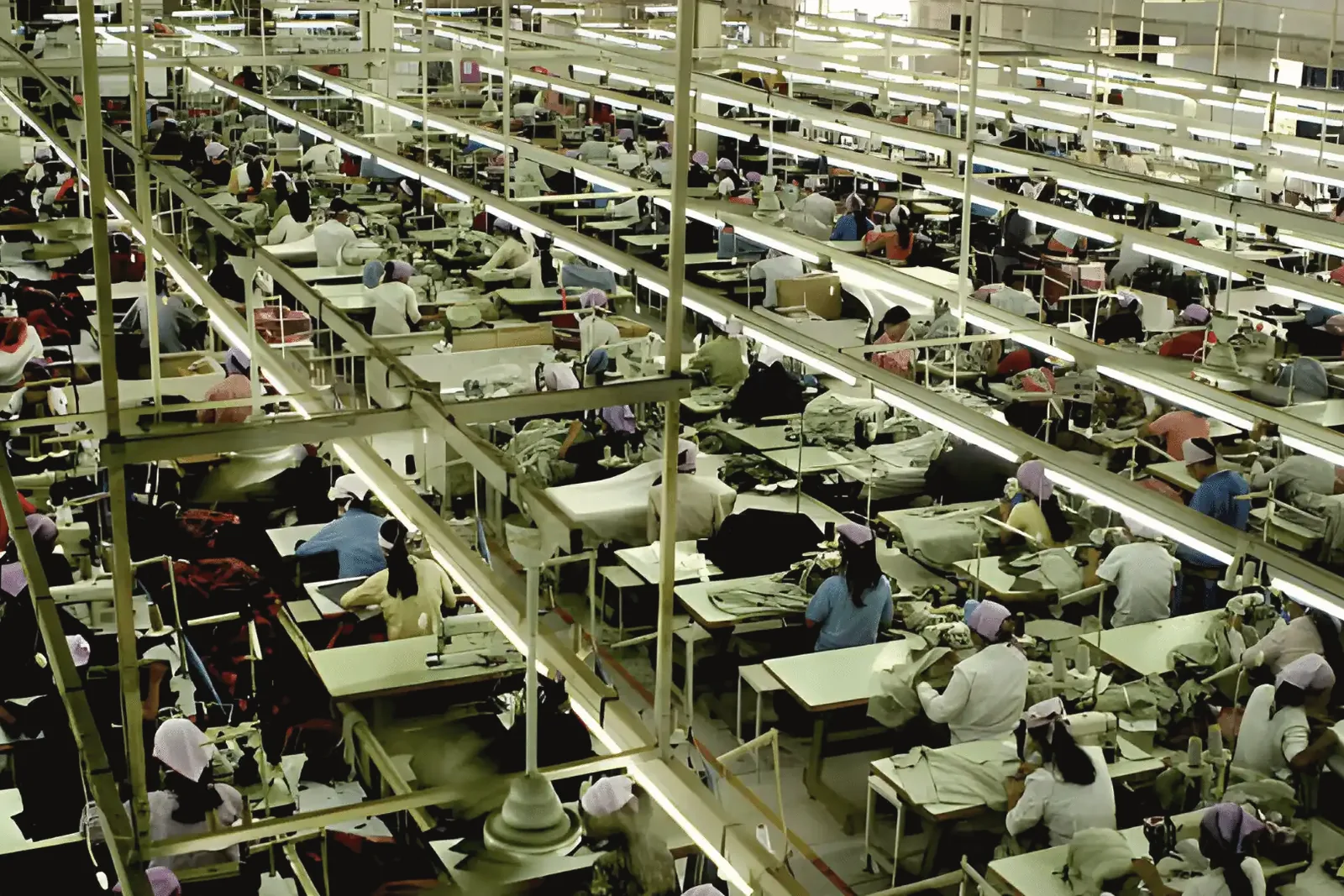


Quick answer: There is no single price for clothing made in Turkey. A garment's unit cost is the sum of fabric, trims, cut-make-trim labour, decoration, packaging and the manufacturer's overhead and margin, and it falls as quantity rises. Turkish prices are usually above the lowest-cost Asian producers and below Western Europe; for EU brands, 0% import duty and short road freight often narrow the landed-cost gap.
What makes up the cost of a garment
Every quotation is built from the same lines. Asking a manufacturer to show them separately makes quotations comparable and shows where you can save.
| Cost line | What it includes | What moves it |
|---|---|---|
| Fabric | Main fabric, lining, interlining, multiplied by consumption per garment plus cutting waste | Fibre, weight, stock or custom colour, garment size and shape |
| Trims | Thread, zips, buttons, elastic, drawcords, labels | Branded or custom trims, quantity |
| CMT labour | Cutting, sewing and finishing minutes | Number of operations, seams, pockets, linings, closures |
| Decoration | Printing, embroidery, washing, dyeing | Technique, number of colours, placement, set-up |
| Packaging | Hang tags, polybags, barcodes, cartons | Custom printing, folding and packing method |
| Overhead and margin | Development, quality control, management, profit | Order size and complexity |
Fabric is normally the largest single line, which is why fabric choice is the strongest lever on price.
One-off costs before bulk production
- Pattern and sample. Charged per style; ask whether the sample cost is deducted from the bulk order.
- Grading. Extending the approved pattern to your size range.
- Screens, embroidery files and custom trims. Set-up costs that are shared across the order.
- Lab tests. If your retailer or market needs test reports for the fabric or garment.
Our sampling guide explains each sample round and what it costs to change a design late.
How order quantity changes the unit price
Fixed work on a style, such as pattern making, marker planning and line set-up, is spread across the pieces in the order. In a small run each piece carries more of it, so unit prices are higher; as quantity grows the price falls and then levels off. Ask for prices at several quantities, for example at the minimum and at two higher steps, to see where your order sits on that curve. Our MOQ guide shows how minimums are counted and how to plan a small first order.
From unit price to landed cost
The fair way to compare countries and suppliers is landed cost: what one garment costs when it arrives at your warehouse.
| Item | What to include |
|---|---|
| Unit price | The manufacturer's price per garment at your quantity |
| Freight | Transport from the factory to your warehouse, divided by the pieces shipped |
| Import duty | 0% in the EU for clothing of Turkish origin with an A.TR certificate; usually 12% for clothing from China or the US |
| Import VAT | Due in the destination country; usually recoverable for VAT-registered businesses |
| Customs and handling | Broker fees and local delivery |
| Cost of time | Stock held in transit and the extra stock you buy to cover long lead times |
A lower unit price can lose its advantage once duty, longer transit and larger safety stock are added. For EU brands, the duty line alone is often decisive. For a fuller comparison, see Turkey vs China vs Portugal and our guide to clothing manufacturers in Turkey.
How to get an accurate quotation
A quotation is only as precise as the brief. Send:
- a tech pack, or sketches with measurements and construction notes;
- the fabric you want, or a swatch, or a target composition and weight;
- quantities per style, colour and size;
- decoration details: technique, size and placement;
- labelling and packaging requirements;
- your delivery address and target date.
With this, a manufacturer can quote the unit price, the sample cost, the minimum order and the timeline in one document.
Ways to lower cost without lowering quality
- Use stock fabrics instead of custom colours for first runs.
- Simplify construction where customers will not notice: fewer panels, standard trims.
- Share trims and fabrics across styles in a capsule.
- Order by size ratio so cutting is efficient.
- Plan reorders so you do not over-buy at the start.
- Approve samples quickly and completely; late changes are the most expensive kind.
Getting a quotation from Ermi Tekstil
We are a clothing manufacturer in Turkey, based in Güngören, Istanbul. Once the design, material and details are fixed, we send an estimated price quotation together with a sample garment, and we confirm the minimum order for each style in writing. Send your project through the contact form, or read how we produce private label clothing.
Frequently asked questions
How much does it cost to manufacture clothing in Turkey?
It depends on the garment: fabric, construction, decoration, packaging and quantity decide the unit price. Turkish prices are usually higher than the lowest-cost Asian producers and lower than Western Europe. Ask for a quotation that lists fabric, trims, labour and decoration separately.
Is it cheaper to manufacture clothing in Turkey or China?
Unit prices are usually lower in China. For EU brands, landed cost is often closer, because clothing of Turkish origin enters the EU at 0% duty with an A.TR certificate while Chinese-origin clothing usually pays 12%, and transit from Turkey is shorter.
Why is a small order more expensive per piece?
Pattern making, marker planning and line set-up are fixed costs per style. In a small order they are divided among fewer pieces, so each garment carries more of them.
Do I pay for samples?
Samples are usually charged per style because they need a pattern and a separate sewing run. Ask whether the sample cost is deducted from the bulk order.
What should a clothing manufacturing quotation include?
Unit price at your quantity, sample cost, minimum order per style and colour, payment terms, delivery terms and a production timeline. A breakdown of fabric, trims, labour and decoration makes quotations comparable.